

A Synopsis of Summer 2026

This summer surpassed records in terms of the weather! It was reliably dry and warm for all of June and July. You might have noticed a lot of butterflies around, not just lot of individuals, but a lot of different species too. We had some butterflies here in Wexford that we would not usually get. Due to the warm southerly air flow. What you may not have realised was that there were less bumble bees, as they find the heat more difficult to handle.

We had a successful breeding season here for our barn owls, they fledged three healthy chicks, perhaps indicating that our hedgerows and extended margins are providing a good habitat for their prey species.

Our swifts and our sandmartins also had successful breeding seasons. There were plenty of insects around for them, and it turns out they were big fans of the pond, for drinking from and hunting over.
We also had a lot of bat activity. In the evenings the pond was a very busy place with the bats hunting the insects over it.
I’m all to aware that farmers get a lot of stick for being obsessed about the weather. Never more so than this summer. While we loved the weather for many reasons, it was not an easy job to keep the cows fed and happy.
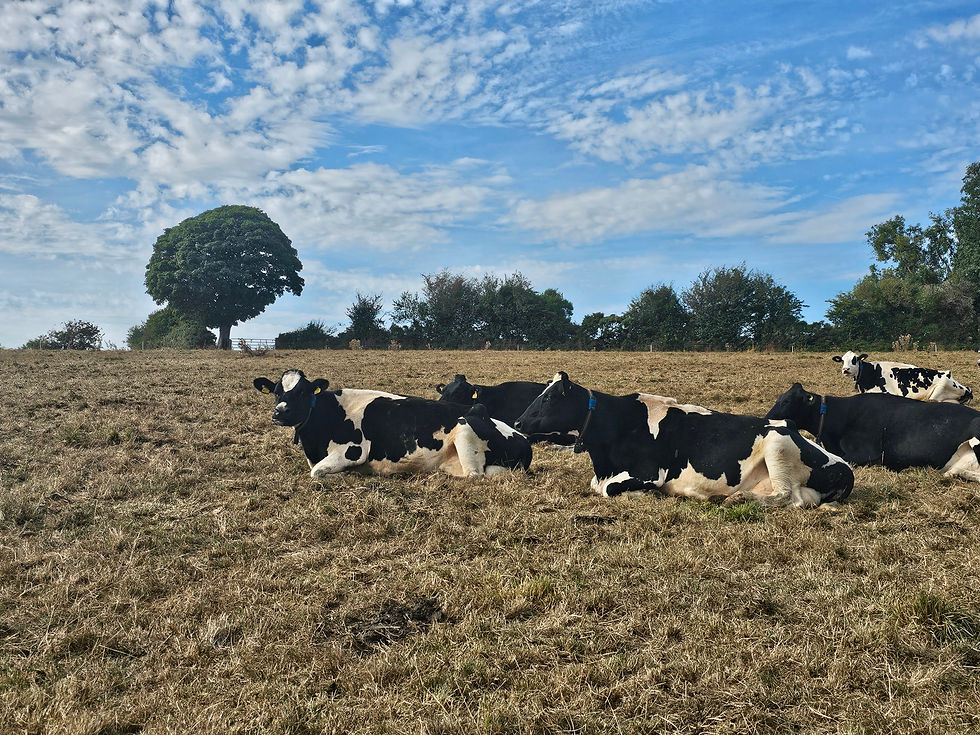
The dairy industry in Ireland depends on grass, we are proud of our grass fed system and indeed globally our dairy products are marketed on this premis. However, as the grass stopped growing, turned brown and shrivelled away feeding the cows became a labour intensive, expensive and stressful issue.

We were feeding our winter feed stock to our cows from the 7th July and didn’t stop until well into September. This then had to be replaced with bought in silage and hay.
I was concerned that the grass might not actually recover, but thankfully once the rain arrived the grass did start growing. The issue at this stage was that by September although it was warm, and there was more growth than we could ever have hoped for. The growth doesn’t last long once the days shorten and the intensity goes out of the sun.

There is a romanticised view at times of farming being straight forward and easy way of life, but there is a lot of unseen work and stress when you are responsible for so many lives. Farmers are definitely resilient problem solvers!
This sort of summer could soon be more the norm than the outlier. It is so important that we constantly look forways to improve our sustainability as well as developing more habitats and biodiversity.


Comments